
Blog
Korps Sukarela Meaning, History, Duties, Training, and Community Service Role

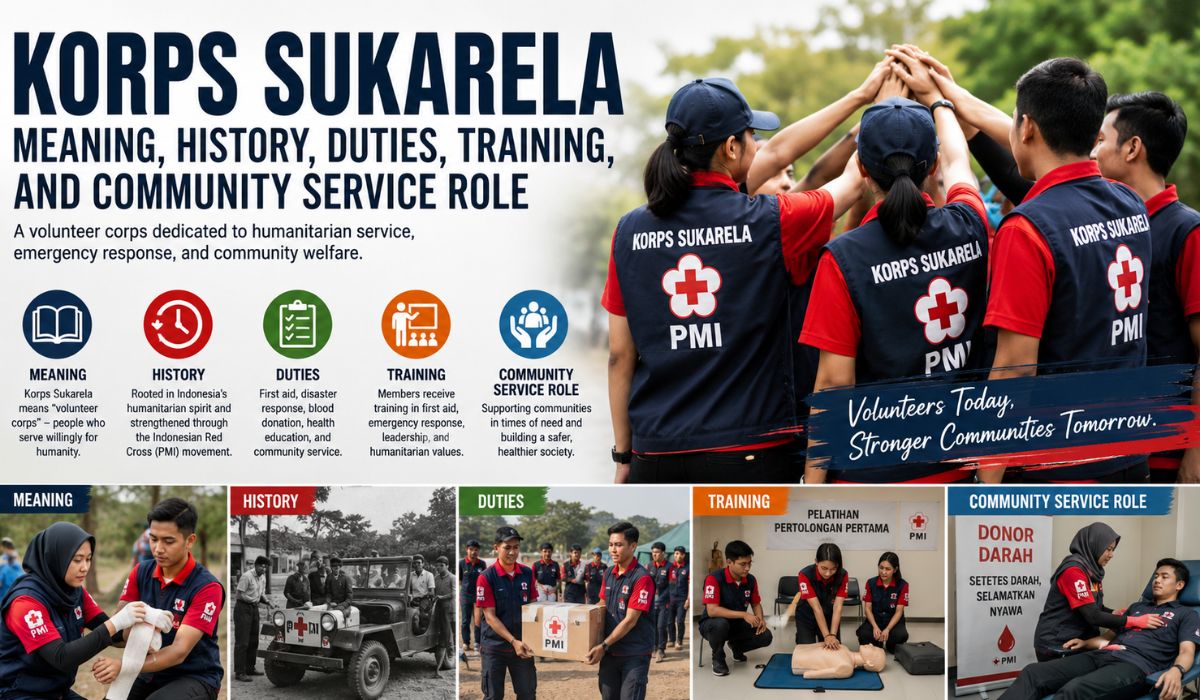
Korps Sukarela is best understood as a volunteer corps built around service, emergency readiness, health support, and humanitarian action. In Indonesia, the term is often connected with KSR PMI, or Korps Sukarela Palang Merah Indonesia, which refers to volunteer groups working under the Indonesian Red Cross structure. For U.S. readers, the easiest comparison is a trained community volunteer team that supports first aid, disaster response, blood donation drives, public health campaigns, and social service programs. Unlike casual volunteering, Korps Sukarela usually involves organized training, discipline, teamwork, and a clear mission to help people during both everyday needs and major emergencies.
What Does Korps Sukarela Mean?
The phrase Korps Sukarela can be translated as “Volunteer Corps.” “Korps” refers to an organized body or group, while “Sukarela” means voluntary or done willingly. Together, the phrase describes people who choose to serve without being forced, often through structured humanitarian work. This meaning is important because Korps Sukarela is not only about showing up when help is needed. It is about commitment, preparation, and responsibility. Members are expected to learn basic emergency skills, understand humanitarian values, and act with care when serving communities affected by illness, accidents, disasters, or social hardship.
History and Background of Korps Sukarela
Korps Sukarela developed within Indonesia’s broader culture of community cooperation and humanitarian service. Its strongest public identity is linked with Palang Merah Indonesia, the Indonesian Red Cross, which has long played a role in disaster response, blood services, health support, and public welfare. Over time, volunteer corps units became especially common in universities, schools, and local communities. These groups gave young people and ordinary citizens a practical way to serve society while learning life-saving skills. The history of Korps Sukarela is therefore not only an institutional story. It is also a story of students, community members, and trained volunteers stepping forward when people need help most.
The Main Purpose of Korps Sukarela
The central purpose of Korps Sukarela is to prepare volunteers for meaningful humanitarian service. Members are trained to support people before, during, and after emergencies. This may include helping at public events, assisting during natural disasters, supporting health education, organizing blood donor programs, and spreading awareness about safety and preparedness. The group also builds character. Volunteers learn discipline, empathy, leadership, and teamwork. For many members, Korps Sukarela becomes a place where public service turns into personal growth, because the work teaches patience, courage, responsibility, and respect for human dignity.
Core Duties and Responsibilities
The duties of Korps Sukarela can vary by location, organization, and level of training, but the main responsibilities usually include first aid support, emergency response assistance, public health outreach, disaster preparedness, and community service. Volunteers may help manage basic medical posts during events, guide people during safety campaigns, support evacuation efforts, assist with logistics, or help distribute supplies during emergencies. They may also encourage blood donation and educate communities about hygiene, disease prevention, and disaster safety. These duties require calm thinking and reliable behavior because volunteers often work in situations where people are anxious, injured, or vulnerable.
Training and Skill Development
Training is one of the most important parts of Korps Sukarela. Members are usually introduced to first aid, basic life support concepts, disaster response procedures, communication skills, field safety, and humanitarian principles. Some units also provide training in leadership, team coordination, public speaking, health education, and logistics. The goal is not to turn every volunteer into a medical professional. Instead, the goal is to create responsible first responders who know what to do, what not to do, and when to refer people to trained professionals. This practical training helps volunteers become more confident, careful, and useful in real situations.
Role in Disaster Response
Indonesia faces earthquakes, floods, volcanic activity, landslides, and other natural hazards, which makes disaster preparedness a major part of Korps Sukarela work. Volunteers may support early response by helping communities stay organized, assisting with evacuation points, distributing relief items, recording basic information, and offering first aid where appropriate. After a disaster, they may help with recovery activities such as public health education, emotional support, cleanup efforts, and community rebuilding programs. Their role is valuable because local volunteers often understand the language, culture, roads, and needs of affected communities better than outside groups.
Community Service and Public Health Impact
Beyond emergency response, Korps Sukarela has a strong role in everyday community service. Many units support blood donation campaigns, health awareness programs, school safety activities, sanitation education, and public event assistance. This steady work matters because communities are healthier and safer when people understand prevention before a crisis happens. For example, a volunteer who teaches basic first aid or promotes blood donation may help save lives long before a disaster occurs. In this way, Korps Sukarela connects emergency readiness with long-term public welfare.
Korps Sukarela in Schools and Universities
Many Korps Sukarela units are active in educational settings, especially universities. These campus-based units give students a structured path to serve while developing useful life skills. Students learn how to work in teams, manage pressure, communicate clearly, and take responsibility for others. They may assist during campus events, organize health campaigns, join disaster response training, or collaborate with local Red Cross branches. For students, Korps Sukarela can also strengthen resumes and leadership experience, but its deeper value is the mindset it builds: service before self, preparation before panic, and compassion before judgment.
Values That Guide Korps Sukarela Members
Korps Sukarela is guided by humanitarian values such as neutrality, care, voluntary service, respect, and responsibility. Volunteers are expected to help people based on need, not background, status, religion, ethnicity, or personal opinion. This value-based approach is what separates humanitarian service from ordinary activity. A good volunteer must be willing to listen, follow instructions, protect privacy, and act with humility. The best members are not only brave in emergencies; they are also respectful, disciplined, and emotionally mature when dealing with people in distress.
Why Korps Sukarela Matters Today
Korps Sukarela matters today because modern communities face many risks, including natural disasters, public health challenges, large public gatherings, and social emergencies. Trained volunteers help close the gap between professional services and community needs. They may not replace doctors, firefighters, paramedics, or government agencies, but they can support those systems by providing early help, organization, and community education. In a world where emergencies can happen quickly, having trained local volunteers is a powerful form of resilience. Korps Sukarela proves that ordinary citizens can become a reliable force for safety and compassion.
Challenges and Opportunities
Like many volunteer organizations, Korps Sukarela may face challenges such as limited funding, uneven training quality, volunteer burnout, and the need for better equipment. Some members may join with enthusiasm but struggle to remain active over time. However, these challenges also create opportunities for stronger leadership, better partnerships, improved training systems, and wider public awareness. Schools, universities, local governments, businesses, and community groups can support Korps Sukarela by providing resources, training spaces, safety equipment, and recognition for volunteers. When supported properly, volunteer corps units can become a lasting asset for public service.
Final Thoughts
Korps Sukarela is more than a volunteer group. It is a structured humanitarian corps that teaches people how to serve with skill, discipline, and compassion. Its meaning, history, duties, training, and community service role all point to one clear purpose: helping people when help is needed most. Whether through first aid, disaster response, blood donation campaigns, health education, or student service programs, Korps Sukarela shows how organized volunteers can strengthen communities. For anyone interested in public service, emergency preparedness, or humanitarian work, Korps Sukarela offers a meaningful example of how ordinary people can make an extraordinary difference.
Frequently Asked Questions (FAQs)
1. What is Korps Sukarela?
Korps Sukarela means “Volunteer Corps.” It usually refers to an organized group of trained volunteers who support humanitarian work, public health activities, first aid, disaster response, and community service.
2. Is Korps Sukarela connected to the Red Cross?
In Indonesia, Korps Sukarela is commonly connected with Palang Merah Indonesia, or the Indonesian Red Cross. Many KSR PMI units operate in universities, communities, and local branches.
3. What does Korps Sukarela do?
Korps Sukarela volunteers may provide first aid support, help during disasters, organize blood donation drives, assist public health campaigns, and support community welfare programs.
4. Who can join Korps Sukarela?
Membership rules can vary by unit, but many groups welcome students, young adults, and community members who are willing to train, serve, and follow organizational guidelines.
5. Does Korps Sukarela provide medical treatment?
Korps Sukarela volunteers may provide basic first aid if properly trained, but they do not replace doctors, nurses, or emergency medical professionals. Their role is supportive and community-based.
6. Why is Korps Sukarela important?
Korps Sukarela is important because trained volunteers can respond quickly, educate communities, support emergency teams, and help people during difficult situations.
7. What skills do members learn?
Members often learn first aid, disaster preparedness, teamwork, communication, leadership, field safety, public health awareness, and humanitarian service principles.
8. Is Korps Sukarela only for disaster response?
No. Disaster response is a major role, but Korps Sukarela also supports blood donation, health education, public events, student service, and everyday community assistance.
For You: How Beliktal Works: Complete Informational Guide for Beginners Today

William Givens Jensen Biography: Family, Career, and Connection to Robin Givens

Who Is Noelle Inguagiato? Everything to Know About Jesse Watters’ Ex-Wife

Mallory Plotnik: Her Life, Family, and Marriage to Phil Wickham

MobilesRus Services: Devices, Accessories, Repairs, and More

Calamariere Explained: Complete Guide to Taste, Cooking, and Serving Ideas

AgentCarrot ATX Bogus Review: Meaning, Risks, and Online Truth

Severna Dakota Lifestyle Trends: Nature, Small Towns, and Local Charm

185.63.253.300 Safety Check: Risks, Errors, and Technical Explanation

What Is Voozon? Complete Guide to This Digital Content Platform

Health Threetrees Com VN Explained for Beginners Seeking Better Health
William Givens Jensen Biography: Family, Career, and Connection to Robin Givens
Who Is Noelle Inguagiato? Everything to Know About Jesse Watters’ Ex-Wife
Mallory Plotnik: Her Life, Family, and Marriage to Phil Wickham
MobilesRus Services: Devices, Accessories, Repairs, and More
Calamariere Explained: Complete Guide to Taste, Cooking, and Serving Ideas
AgentCarrot ATX Bogus Review: Meaning, Risks, and Online Truth
Severna Dakota Lifestyle Trends: Nature, Small Towns, and Local Charm
185.63.253.300 Safety Check: Risks, Errors, and Technical Explanation
What Is Voozon? Complete Guide to This Digital Content Platform
Health Threetrees Com VN Explained for Beginners Seeking Better Health
-

 Celebrity4 months ago
Who Is Natalie Oglesby Skalla? The Untold Story of Frank Sinatra Jr.’s Daughter
-

 Celebrity4 months ago
The Untold Story of Jessica Isabel Rowling Arantes and Her Famous Mother J. K. Rowling
-
 Health4 months ago
Health Threetrees Com VN Explained for Beginners Seeking Better Health
-

 Celebrity4 months ago
Grace Anne Matthews’ Story: Growing Up as Dave Matthews’ Daughter