
Technology
AgentCarrot ATX Bogus Review: Meaning, Risks, and Online Truth

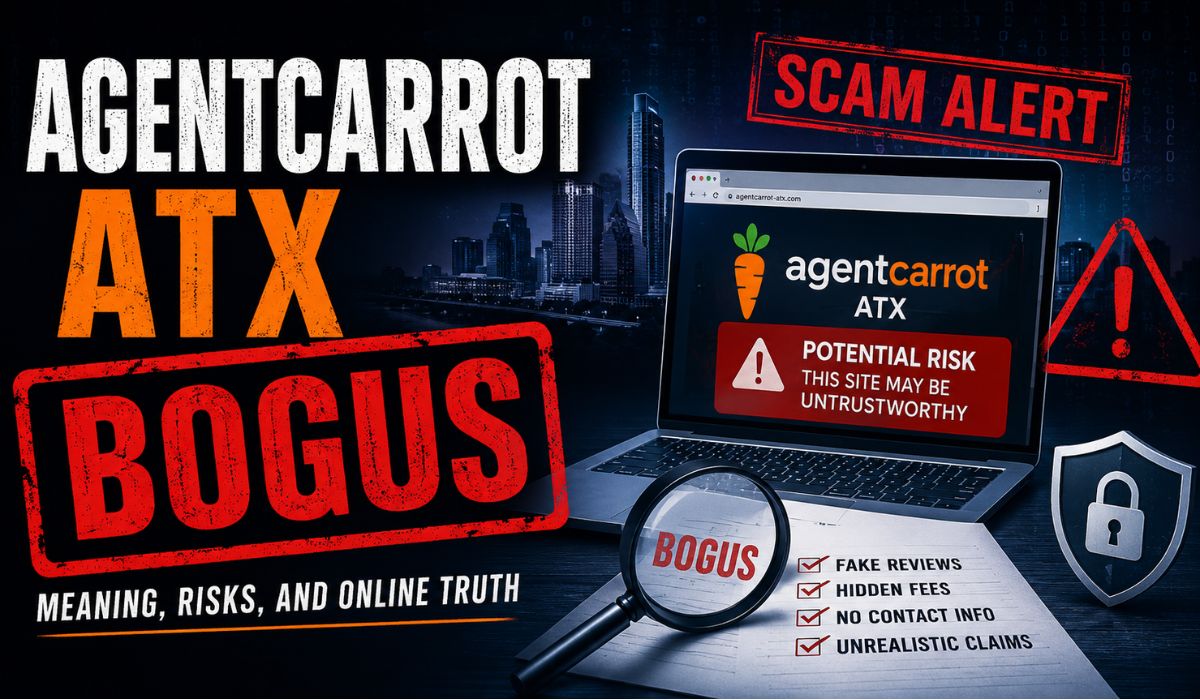
The phrase AgentCarrot ATX Bogus has started appearing in online searches, and many readers want to know whether it points to a real technology issue, a suspicious digital service, or simply a confusing keyword trend. In simple terms, the phrase combines three ideas: “AgentCarrot,” which sounds connected to online real estate marketing or software tools; “ATX,” which may refer to Austin, Texas, a tech abbreviation, or a brand-style label; and “bogus,” a word people usually use when questioning trust, accuracy, or legitimacy. Because the wording is unusual, it can easily create confusion for users who are trying to understand whether there is a scam, a fake platform, a misleading review, or just search-engine noise around the term. This review explains the meaning, possible risks, and online truth behind the topic in a practical way for U.S. readers.
What Does AgentCarrot ATX Bogus Mean?
AgentCarrot ATX Bogus does not appear to be a widely established technology product name on its own. Instead, it looks more like a search phrase built around uncertainty. People often use terms like “bogus,” “fake,” “scam,” “review,” or “truth” when they are unsure whether a platform, digital tool, website claim, or online business name is trustworthy. In this case, the phrase may be linked to users trying to verify a tech-related name, a real estate marketing tool, or an online service that has been mentioned in scattered web content. The important point is that a phrase becoming searchable does not automatically prove wrongdoing. It only shows that people are asking questions, and those questions deserve careful research instead of quick assumptions.
Why the Keyword Is Gaining Online Attention
The reason AgentCarrot ATX Bogus may attract attention is because it sounds like a mix of technology, local branding, and trust concerns. “Agent” can suggest automation, AI agents, software assistants, real estate agents, or marketing agents. “Carrot” may point readers toward website-building or lead-generation services in the real estate space. “ATX” is commonly used as shorthand for Austin, Texas, but it can also appear in tech names, hardware labels, or business branding. When the word “bogus” is added, the whole phrase becomes more suspicious in tone. This combination makes people curious and encourages searches from users who want to know whether the term represents a real service, a misleading page, a fake review, or an online rumor.
Understanding the Technology Angle
From a technology perspective, the topic should be examined through digital trust signals. A legitimate online platform usually has clear ownership details, secure website access, transparent pricing, updated contact information, real customer support, and a consistent online footprint. A questionable platform, on the other hand, may use vague wording, copied content, missing company details, strange redirects, poor grammar, or unrealistic claims. When researching AgentCarrot ATX Bogus, readers should not rely on the keyword alone. They should look at the specific website, domain history, business profile, user reviews, privacy policy, terms of service, and whether the platform asks for sensitive information. These checks help separate real concerns from simple online confusion.
Possible Risks Connected to Confusing Tech Terms
The biggest risk with a confusing phrase like AgentCarrot ATX Bogus is not always the phrase itself, but the way users respond to it. Some people may click random search results, visit low-quality websites, or trust unverified claims without checking the source. In technology and digital marketing, misleading pages can be created to capture traffic from trending keywords. These pages may not offer real value and may push users toward ads, affiliate links, fake support forms, or suspicious downloads. If a page asks for login details, payment information, business credentials, or personal data without proving its legitimacy, users should be careful. Online safety begins with slowing down before clicking, signing up, or sharing information.
How to Check Whether a Platform Is Bogus
A smart review process starts with basic verification. First, check whether the website uses HTTPS and has a professional domain name. Second, review the About, Contact, Privacy Policy, and Terms pages. Third, search for the company name with words like “reviews,” “complaints,” “support,” “pricing,” and “BBB.” Fourth, compare claims across multiple sources instead of trusting one article. Fifth, check whether the platform has active social profiles, real customer feedback, and consistent branding. If a website connected to AgentCarrot ATX Bogus lacks these trust signals, that does not automatically prove it is a scam, but it does mean users should proceed carefully. Trustworthy technology companies make verification easy.
The Role of SEO and Search Confusion
Search engines sometimes surface strange keyword combinations because people are looking for answers, not because the phrase represents a verified product. In SEO, low-competition keywords can become popular when websites publish articles around unusual terms. That may explain why AgentCarrot ATX Bogus appears as a topic even if the meaning is not fully clear. Some publishers create content around odd search phrases to capture traffic, but the content may be thin, repetitive, or unsupported. For readers, this means one important thing: do not treat every search result as proof. A term can rank in Google without being authoritative. Quality research requires source checking, context, and common sense.
Is AgentCarrot ATX Bogus a Scam?
There is not enough clear public evidence to label AgentCarrot ATX Bogus as a scam by name alone. The safer and more accurate answer is that the phrase appears to reflect suspicion, uncertainty, or online investigation. A scam claim should never be made casually because it can damage reputations and mislead readers. Instead, users should focus on the actual website, service, or offer they are evaluating. If the related page promises guaranteed results, asks for upfront payment without clear terms, hides ownership details, or uses pressure tactics, those are warning signs. If it has transparent information, real support, and verifiable customer history, the concern may simply be keyword confusion.
Red Flags Users Should Watch For
Several red flags can help readers evaluate any platform connected to this topic. Be cautious if a site has no real business address, no support email, no refund policy, copied text, fake testimonials, broken pages, or unclear service descriptions. Watch out for exaggerated claims such as instant rankings, guaranteed leads, risk-free income, or secret technology that no one can verify. Also be careful with websites that ask users to download files, install browser extensions, or enter account credentials. In the U.S. technology market, trustworthy services usually explain what they do, who runs them, what users pay for, and how customer data is protected. Lack of clarity is often the first warning sign.
How Businesses Should Respond to Online Reputation Concerns
If a business discovers that phrases like AgentCarrot ATX Bogus are appearing around its name, the best response is transparency. Companies should publish clear FAQs, update their contact details, explain their services, and address user concerns directly. They should also monitor search results, respond politely to customer questions, and correct false information without sounding defensive. Online trust is built through consistency, not silence. For real estate technology, SaaS platforms, and lead-generation tools, reputation matters because users are often sharing business data, marketing budgets, and customer information. A company that handles confusion openly can often turn a negative search phrase into an opportunity to build credibility.
Safe Steps Before Using Any Digital Service
Before signing up for any platform that appears under the AgentCarrot ATX Bogus search phrase, users should follow a simple safety process. Visit the official website directly instead of clicking unknown ads. Read the pricing page carefully. Check whether the company explains cancellation terms. Look for real case studies instead of generic promises. Search for independent customer feedback. Avoid giving payment details until you understand what you are buying. If the service involves real estate leads, websites, SEO, CRM tools, or marketing automation, ask how your data will be stored and used. These steps are basic, but they protect users from costly mistakes.
Final Thoughts
AgentCarrot ATX Bogus is best understood as a caution-based search phrase rather than a confirmed scam label. It reflects the way modern internet users investigate unfamiliar technology names, local business terms, and digital marketing claims before trusting them. The truth depends on the specific website or service being reviewed, not just the keyword itself. For readers, the best approach is to verify sources, inspect trust signals, avoid rushed decisions, and treat unsupported claims with caution. In today’s online world, confusion spreads quickly, but careful research still works. Whether the term points to a real concern or simple SEO noise, users should rely on evidence before forming a final opinion.
Frequently Asked Questions (FAQs)
1. What is AgentCarrot ATX Bogus?
AgentCarrot ATX Bogus appears to be a search phrase used by people who want to understand whether a related digital platform, service, or online claim is trustworthy. The phrase itself does not automatically prove that a product is fake or unsafe.
2. Is AgentCarrot ATX Bogus a real company?
The phrase does not clearly identify one widely recognized company by itself. It seems to combine a brand-like term, a location or tech abbreviation, and a trust-related word, which is why users should verify the exact website or service they are researching.
3. Does “bogus” mean it is definitely a scam?
No. The word “bogus” shows suspicion, but suspicion is not proof. A platform should only be judged after checking ownership details, customer reviews, security practices, pricing, and real user experiences.
4. Why are people searching for AgentCarrot ATX Bogus?
People may be searching for it because they saw the phrase online, found unclear information, or wanted to check whether a service connected to the name is legitimate. Unusual technology keywords often gain attention when users are unsure what they mean.
5. How can I check if a tech platform is safe?
Check for HTTPS, clear contact information, privacy policies, real reviews, transparent pricing, and consistent branding. Avoid platforms that hide ownership details, make unrealistic promises, or ask for sensitive data too quickly.
6. Can SEO create confusion around terms like this?
Yes. SEO content can sometimes make unusual keywords look more important than they really are. A phrase may appear in search results because websites are targeting it, not because it represents a major verified issue.
7. Should I avoid every website using this keyword?
Not necessarily. You should avoid unsafe behavior, not just a keyword. Review the actual site, check its trust signals, and make sure it provides clear information before sharing money, data, or account details.
8. What is the online truth about AgentCarrot ATX Bogus?
The online truth is that the phrase should be treated with caution and context. There is no need to panic, but users should research carefully, verify claims, and avoid trusting unsupported articles or suspicious websites.
For You: Severna Dakota Lifestyle Trends: Nature, Small Towns, and Local Charm

William Givens Jensen Biography: Family, Career, and Connection to Robin Givens

Who Is Noelle Inguagiato? Everything to Know About Jesse Watters’ Ex-Wife

Mallory Plotnik: Her Life, Family, and Marriage to Phil Wickham

MobilesRus Services: Devices, Accessories, Repairs, and More

Calamariere Explained: Complete Guide to Taste, Cooking, and Serving Ideas

AgentCarrot ATX Bogus Review: Meaning, Risks, and Online Truth

Severna Dakota Lifestyle Trends: Nature, Small Towns, and Local Charm

185.63.253.300 Safety Check: Risks, Errors, and Technical Explanation

What Is Voozon? Complete Guide to This Digital Content Platform

Health Threetrees Com VN Explained for Beginners Seeking Better Health
William Givens Jensen Biography: Family, Career, and Connection to Robin Givens
Who Is Noelle Inguagiato? Everything to Know About Jesse Watters’ Ex-Wife
Mallory Plotnik: Her Life, Family, and Marriage to Phil Wickham
MobilesRus Services: Devices, Accessories, Repairs, and More
Calamariere Explained: Complete Guide to Taste, Cooking, and Serving Ideas
AgentCarrot ATX Bogus Review: Meaning, Risks, and Online Truth
Severna Dakota Lifestyle Trends: Nature, Small Towns, and Local Charm
185.63.253.300 Safety Check: Risks, Errors, and Technical Explanation
What Is Voozon? Complete Guide to This Digital Content Platform
Health Threetrees Com VN Explained for Beginners Seeking Better Health
-

 Celebrity4 months ago
Who Is Natalie Oglesby Skalla? The Untold Story of Frank Sinatra Jr.’s Daughter
-

 Celebrity4 months ago
The Untold Story of Jessica Isabel Rowling Arantes and Her Famous Mother J. K. Rowling
-
 Health4 months ago
Health Threetrees Com VN Explained for Beginners Seeking Better Health
-

 Celebrity4 months ago
Grace Anne Matthews’ Story: Growing Up as Dave Matthews’ Daughter